AI Mode Queries Are Getting Longer. Track the Long Questions.
Google says the average AI Mode search is three times the length of a classic Search query. What that figure does and does not say, and why the questions you track should get longer too.
本文目前只有英文版。站点其余部分已汉化,这篇内容尚未翻译。
People ask Google's AI Mode longer questions than they type into classic Search: on Google's own numbers, about three times as long on average. For anyone tracking AI visibility, the practical consequence is simple. If the questions you monitor are still two-word keywords, you are measuring the part of search that changed least. Add the long, specific questions your buyers actually ask, because that is where AI answers are now being written.
The rest of this post is about reading the figure carefully, and about what "track the long questions" means in practice.
What Google actually published
On 19 May 2026, a year after AI Mode launched in the U.S., Google posted a short set of usage findings. The author was Shivani Mohan, Vice President of Data Science and UXR. The line that matters here says "the average AI Mode search is triple the length of a traditional Search query". (blog.google, "How AI Mode is changing the way people search in the U.S.", read 2026-09-24.)
Three things in the same post keep that number honest:
- Short queries are growing too. The sentence that carries the figure opens by saying Google sees growth in both short and long queries in AI Mode. Longer on average does not mean short queries are going away.
- It is U.S. data. The findings are framed as AI Mode in the United States. Query length varies by language and market, so do not transplant the multiplier onto a German or Japanese keyword set.
- It is an average of a mix that has changed. In the same list of findings, Google says more than one in six searches in the U.S. now use voice or images. If spoken questions run longer than typed ones, part of the rise is a change in how people search, not only what they ask.
None of that weakens the direction. It just means the useful takeaway is "questions are getting longer and more specific", not a precise ratio to plan around.
The ad-side analysis we did not use
A Google Ads query-length analysis published by Search Engine Land is being quoted widely, with figures for how impression and conversion share moved between short and long queries. Its page returned a bot-verification wall to our client when we tried to read it. The copies we could read were summaries of summaries, so we have left its numbers out. If you can open the original, it is worth reading next to Google's post. Ad impressions and organic AI answers are different surfaces, but both describe the same people typing.
Why longer questions change what you should track
A long question carries information a short keyword throws away: who is asking, what they have already ruled out, and what the answer is for.
Compare two queries:
crm softwarecrm for a five-person agency that already uses google workspace and bills hourly
The first gets an answer about CRMs in general. The second gets an answer about a very small segment, and the pages able to answer it can be entirely different ones: comparison posts, integration pages, community threads, niche review sites. A brand that never appears for the first query can be a natural answer to the second, and the reverse can happen too.
Google's own guide to generative AI features in Search names the mechanism: query fan-out, in which the model generates a set of related queries to fetch more results for the question it was asked. A longer question gives the system more to fan out from, so the set of pages that can be cited widens and shifts.
So a tracking set built only from head terms has two blind spots:
- It misses where you could win. A specific question has fewer sources that answer it well, which is where a smaller brand has room to be the one cited.
- It misses where you lose. A competitor can own every long question in your niche while you hold steady on the short term you watch. Your dashboard stays flat and you conclude nothing changed.
How to build a set of long questions worth tracking
Start from what people already typed. Your Search Console query report usually holds long phrasings, often ranking deep in the results with a handful of impressions each. Filter for queries of five or more words and for question openers (how, which, best, vs, for, without, can). These are the closest thing you have to real AI prompts, and they are free.
Add the questions your customers ask you. Sales-call notes, support tickets, onboarding emails and community threads contain the qualifiers people actually use: team size, budget, the tool they are switching from, the constraint that rules options out. Once you have a list, our question extractor helps check the other side: paste a section of your page and it lists the questions that text answers and the ones it leaves open.
Write each tracked question the way a buyer would say it, not the way you would. The most common failure is a list of prompts that uses the vendor's own category name. Buyers often describe the problem instead of the product category, and engines answer the words they were given.
Keep a few short terms as anchors. They are still real demand, and Google says they are growing too. They also give you a stable baseline to read the long questions against.
Group long questions by intent rather than tracking each in isolation. "Alternatives to X", "X for [segment]", "X vs Y" and "how to [job] without X" behave differently. A shift across a whole group means more than a movement on one question, which can swing from one run to the next.
A two-minute audit of the list you already have
Export whatever you track today and count the words in each entry. If nearly every entry is one to three words, the list was built for a ranked page of links, and it describes the searches that are changing least. Then take your five most valuable short terms and write, for each, the longest version a real buyer might say out loud: who they are, what they already use, what they want to avoid. Ask one engine each of those long versions by hand and note which sources it cites. If the sources for the long versions look nothing like the sources for the short ones, your current list is watching the wrong conversation, and you have your first set of long questions to add.
Where our checker fits, and where it stops
Our free AI visibility checker asks each engine one question: your brand name on its own. That is deliberately the shortest query there is. It tests whether the engines connect your name to your site at all, which is the first thing to know. It is not a measure of how you do on the long questions this post is about, and we would rather say so than let a single bare-name check stand in for them.
Tracking long questions over time is what the paid product does. The questions it tracks for a site start from that site's own Search Console queries, so they are phrasings real searchers used rather than ones we invented. If you are working out which setup fits your situation (a SaaS founder, an agency, a blogger), the solutions pages walk through each one.
One more caution while you build the list. The same question can get a different answer depending on where the asker is. Where an engine lets you set that, it is worth tracking the long questions from the markets you sell into. We cover which engines allow it in AI visibility by country.
更多文章
Google and Bing Now Say GEO Is SEO. What That Leaves You To Do
Google's Search Central guide files AI search optimization under SEO, and Bing's guidelines now define GEO by name. What both documents actually say, which SEO basics remain the precondition, and what is specific to AI answers.

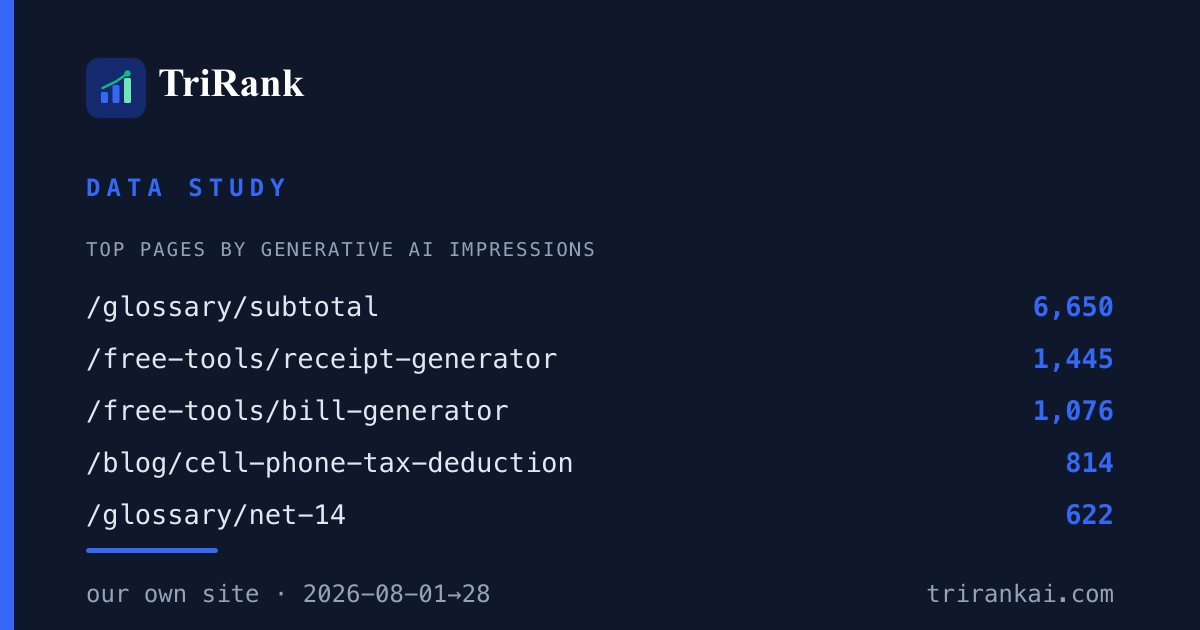
Google's Generative AI Report, Next to a Citation Sweep of the Same Site
Google now reports which pages it showed inside generative AI features. We put that export beside our own multi-engine citation sweep of the same site over the same 28 days — and the first thing worth saying is that the two denominators are nothing alike.
Self-Hosting Your SEO Stack: What It Actually Costs
Open-source SEO tools are having a moment, and self-hosting one is a real option. Here is the honest arithmetic: metered data fees, maintenance, a history that starts at zero, and one upstream you do not control.
邮件列表
加入我们的社区
订阅邮件列表,及时获取最新消息和更新