Google and Bing Now Say GEO Is SEO. What That Leaves You To Do
Google's Search Central guide files AI search optimization under SEO, and Bing's guidelines now define GEO by name. What both documents actually say, which SEO basics remain the precondition, and what is specific to AI answers.
本文目前只有英文版。站点其余部分已汉化,这篇内容尚未翻译。
Both of the big Western search engines now say the same thing in their official documentation. Getting into AI answers rests on ordinary SEO: be crawlable, be indexed, write something worth citing, and do not game the system. Google's guide files optimizing for generative AI search under SEO. Bing's guidelines define Generative Engine Optimization by name and treat it as a set of eligibility conditions on top of the same foundation. What is left for you is not a new discipline. It is a short list of things AI answers care about more than a ranked list of links does, plus measuring the result, because it is a different output.
What Google's guide says
Google's page is "Optimizing your website for generative AI features on Google Search" in Search Central, marked last updated 2026-07-10 when we read it on 2026-09-24 (developers.google.com/search/docs/fundamentals/ai-optimization-guide).
The sentence everyone quotes: "optimizing for generative AI search is optimizing for the search experience, and thus still SEO". The reasoning around it is what matters more. AI Overviews and AI Mode retrieve pages through Google's core ranking systems and ground their responses in them. So a page that cannot rank, or is not indexed, is not available to be cited. The guide also describes query fan-out: the model issues a set of related searches to gather more material for one question.
It then does something unusual for Google documentation and lists things you can ignore for Google Search:
- llms.txt and other special AI files. Google Search does not use them. The guide adds that keeping one for other services is fine and neither helps nor harms you in Google.
- Chunking content into small pieces for machines. Not required. There is no ideal page length.
- Rewriting content just for AI, including worrying that you lack long-tail variations. The systems handle synonyms.
- Seeking inauthentic mentions across the web. Google's spam systems exist for this.
- Overfocusing on structured data. Not required for AI features, though still useful for rich results.
Two more points are worth knowing. To be eligible for AI features, a page must be indexed and eligible to show with a snippet, and the site must be included in Search generative AI features in Search Console. The guide also warns readers to be wary of third-party tools that claim access to Google's internal metrics. That warning applies to tools like ours, so to be plain about it: we have no such access. We ask engines public questions and read which sources their answers cite.
What Bing's guidelines say
Bing's Webmaster Guidelines now cover Bing search, Copilot and grounding API results together (bing.com/webmasters/help/webmaster-guidelines-30fba23a, read 2026-09-24). The page lists grounding results and citations as outcomes alongside indexing and ranking. Its first numbered section makes the same argument as Google: the fundamentals that get a page crawled, indexed and ranked are the ones that make it eligible for grounding and citation.
Bing also gives GEO an official definition: "Generative Engine Optimization (GEO) focuses on content eligibility for grounding and reference in AI responses." The same passage says plainly that neither SEO nor GEO assures rankings, traffic or citations. It then lists abuses that cost eligibility, including one that is specific to this era: content written to manipulate the language models behind Bing and Copilot, in other words prompt injection.
What makes Bing's page more useful than Google's in practice is that it is concrete. Among its numbered sections:
- Make every important URL reachable through standard HTML links, and do not make critical content depend on client-side rendering.
- Use IndexNow and accurate sitemaps so Copilot does not cite stale or removed URLs.
- Be careful with
NOCACHEandNOARCHIVE. Bing says the first limits Copilot to URL, title and snippet, and the second keeps content out of Copilot responses and grounding altogether. - Make key statements explicit on the page, so content can be verified independently.
- Name people, organisations, products and places clearly and consistently.
- Put essential information near the top.
- Watch impressions, citations and grounding, not only clicks. Bing says outright that a fall in clicks does not always mean a loss of visibility.
The SEO basics that are still the precondition
Read together, the two documents describe the same foundation. If any of these fail, nothing AI-specific will help:
- Crawlable. The crawler can reach the page through real links and is not blocked in robots.txt. For most AI crawlers, as far as anyone has measured, it also means readable without running JavaScript. We cover that separately in why JavaScript-only links hide pages from AI crawlers.
- Indexed and snippet-eligible. Google requires both for AI features. Bing ties grounding eligibility to indexing too.
- One canonical URL per piece of content. Bing says duplicates lower its confidence in which URL to cite.
- Content worth citing. Google's term is non-commodity content: a first-hand view, not a summary of what is already out there.
- Clean signals of freshness and removal. Sitemaps, lastmod, 404s for deleted pages, redirects for moved ones.
This is why technical SEO problems carry straight through into AI answers. The retrieval step comes before the writing step, and on Google and Bing it runs on the search index.
What is specific to AI answers
The foundation is shared, but the output is not. A ranking puts your page in a list. An answer does three other things, and each needs attention of its own.
It cites or it does not. Being cited is binary per answer, and an answer can be excellent for your category without naming you at all. Ranking seventh is still visible. Not being cited is not. That is why ranking well on Google does not carry over automatically, as we set out in why ranking on Google doesn't get you cited by AI.
It may cite someone else's page about you. Engines often draw on reviews, comparisons, forums and directories rather than a brand's own site. Your visibility therefore depends partly on pages you do not control. Google's warning against inauthentic mentions is the edge of this. Genuine coverage on sites engines already trust is legitimate and matters.
It has to know which "you" is meant. An answer is written about an entity. If your name is shared with another company, a person or a common word, the engine can merge you or pick the other one. Bing's instruction to name entities clearly and consistently is the official version of this. We look at what it does in practice in brand-name collisions in AI answers.
So what do you actually do differently?
Less than the GEO industry suggests, and more than "nothing":
- Fix the foundation first. Run a crawlability and indexability pass. Our GEO checklist covers the page-level half (robots rules for AI bots, body text present without JavaScript, sitemap).
- Measure the output that is actually different. Google's guide points to the Generative AI performance report in Search Console for its own surfaces. For the other engines, check directly. Our AI visibility checker asks several engines about your brand and shows whether your domain is among the sources they cite.
- Spend on citable pages, not on hacks. That means clear statements, first-hand evidence, one topic per URL and the answer near the top. Both documents converge on this, and neither endorses the tricks.
Both engines have now said out loud what they reward, and neither describes a shortcut. What remains is ordinary, patient work, plus checking the result where it now appears.
更多文章
Google's Generative AI Report, Next to a Citation Sweep of the Same Site
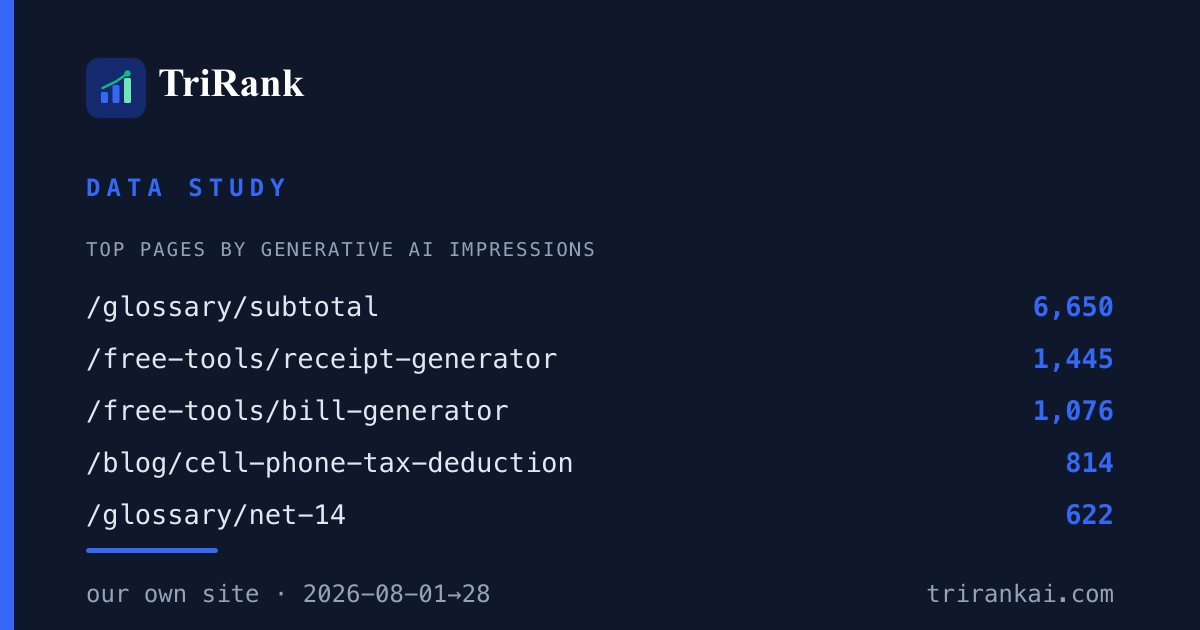
Google now reports which pages it showed inside generative AI features. We put that export beside our own multi-engine citation sweep of the same site over the same 28 days — and the first thing worth saying is that the two denominators are nothing alike.

Self-Hosting Your SEO Stack: What It Actually Costs
Open-source SEO tools are having a moment, and self-hosting one is a real option. Here is the honest arithmetic: metered data fees, maintenance, a history that starts at zero, and one upstream you do not control.
42% of Brands AI Knows By Name Vanish When You Ask for Alternatives
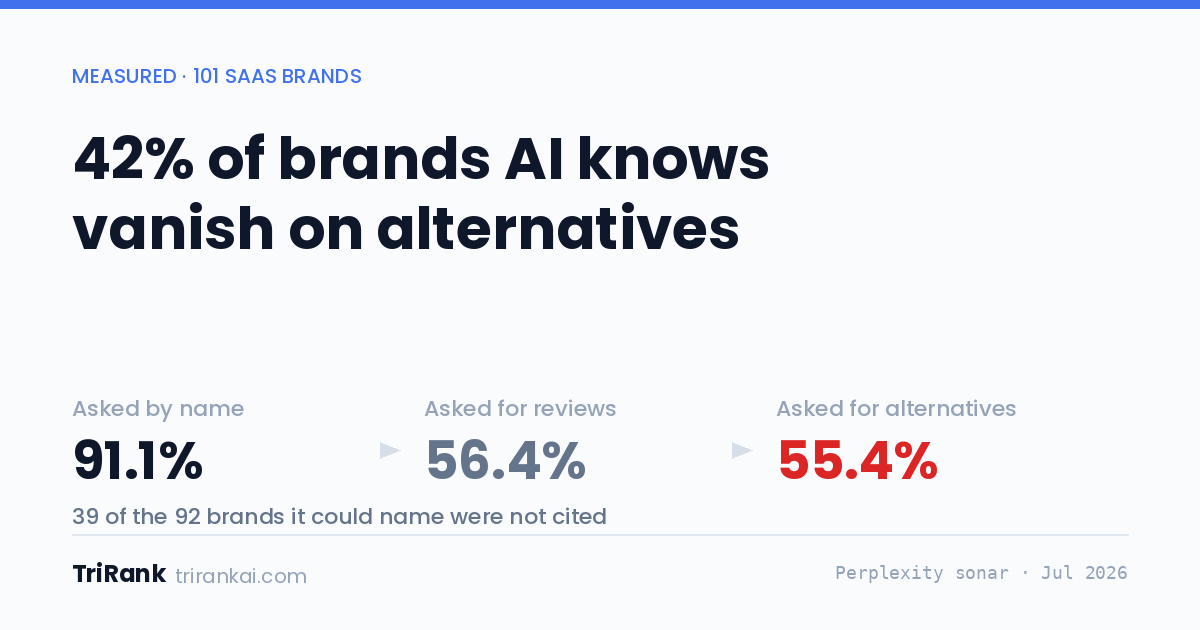
AI engines name 91% of SaaS brands asked directly. Ask the same engine for alternatives in that category and 42% of them disappear. Measured across 101 brands.
邮件列表
加入我们的社区
订阅邮件列表,及时获取最新消息和更新