The UK's Proposed Search Choice Screen Could Include AI Assistants
On 2026-09-23 the CMA proposed a yearly search choice screen on Android and Chrome that AI assistants could join. What's proposed, the timetable, and what it means for AI citations.
本文目前只有英文版。站点其余部分已汉化,这篇内容尚未翻译。
Short answer: on 23 September 2026 the UK Competition and Markets Authority proposed that Google show Android and Chrome users a search choice screen, prompt them every year to choose again, and let AI assistants that meet its criteria appear on that screen. It's a proposal, not a decision. Views are invited until 9 October 2026 and the CMA expects to decide by the end of the year. For anyone who cares about being cited by AI assistants, the takeaway is that the number of front doors is growing, and which door people use is starting to depend on where they are.
Everything in this post comes from the CMA's press release of 23 September 2026, read 2026-09-24. Where the release doesn't say something, we don't either.
What the CMA proposed
Under the proposal, Google would be required to:
- show a choice of search services when someone first uses an Android phone or first opens Chrome;
- prompt them every year after that to choose their default provider again;
- allow AI assistants onto the choice screen where they meet the relevant criteria, which the release says include technical and security requirements;
- require providers on the screen to fairly attribute publisher content, so people can reach the source material and see where results came from.
The release names ChatGPT and Perplexity as examples of the new services people increasingly use for search. It doesn't say either would qualify for the screen. That depends on criteria the release doesn't spell out.
The CMA's chief executive, Sarah Cardell, described the aim as "future-proofing the options available to people in the UK."
The timetable
- October 2025: the CMA designated Google with strategic market status in general search and search advertising (per the release's notes to editors).
- Early 2026: a package of conduct requirements went out for consultation, including user choice, data portability, fair ranking and a publisher opt-out from AI features in Google's results.
- 3 June and 17 June 2026: publisher controls, then fair ranking and data portability requirements, were imposed.
- 23 September 2026: the strengthened user-choice proposals, the subject of this post, went out for consultation.
- 9 October 2026: consultation closes.
- By end of 2026: the CMA expects a final decision on this conduct requirement.
So anything below about "what changes" is conditional. The proposal could be adopted as written, changed after consultation, or narrowed.
What it would mean for being cited by AI assistants
A choice screen changes which service a person uses by default, not how any service picks its sources. Its likely effect on AI citations is indirect, and it runs through two mechanisms.
More front doors
Today, on most Android phones and in Chrome, a question typed into the address bar goes to Google by default. If an AI assistant can appear on the screen, and some users pick it, a share of those questions goes to a service that answers in prose and cites a handful of sources rather than returning a page of links.
That matters because assistants differ in which sources they cite. A site that shows up well in one assistant's answers can be missing from another's for the same question. That's why we record every engine as its own series rather than combining them: the source lists overlap, but they aren't the same list. More users on more assistants means your visibility in each one carries more weight, not just your visibility in Google.
Visibility that splits by region
The proposal is UK-only. If it's adopted, the mix of assistants people use in the UK could drift away from the mix elsewhere. The effect is regional, and it stacks on something already true: some assistants answer differently depending on where the question is asked from.
Put those together and "are we cited by AI?" stops being one question. It becomes "are we cited by this assistant, for this question, asked from this country?" A site selling mainly into the UK has more reason than before to measure from the UK specifically.
Attribution, if it holds
The attribution requirement is the part most directly about publishers. If providers on the screen must attribute publisher content so people can reach the source, a citation is more likely to be a visible, clickable reference than an uncredited paraphrase. The release states the goal but not the mechanics, so how much this changes in practice will depend on the final text.
What we would not conclude yet
- That ChatGPT or Perplexity will be on the screen. The release doesn't say so.
- That UK users will switch in large numbers. The release makes no forecast, and we have no switching data, so we won't guess.
- That anything changes before the decision. Until the CMA decides, the proposal changes nothing on anyone's phone.
What to watch before the decision
Three parts of the final text will decide how much this matters for AI citations:
- The eligibility criteria. The release says AI assistants must meet criteria, including technical and security requirements, but doesn't list them. Which assistants qualify is the whole question for anyone trying to predict where UK searches go.
- How the screen is laid out. The release says Google must offer a choice, not how many options appear or in what order. Those details can shape what people pick.
- What "fairly attribute" means in practice. Whether it requires a visible link, a named source or something looser will decide whether the requirement changes how citations look to a reader.
What you can do now
Nothing here requires waiting for the decision. What helps is having a dated reading from before any change, so you have something to compare against afterwards.
- Take a reading from the UK and from your home market. Our free AI visibility checker has an "Ask as a user in" setting and a compare view for two markets. Not every engine accepts a location. The checker marks the rows that were asked without one, so don't read those as UK answers.
- Keep the date. A reading is useful later only if you know when it was taken. Note the date, the questions you asked and the market.
- Read the source lists, not just the verdict. When an assistant cites someone else, the cited page tells you what kind of content that assistant reaches for in that market.
- Measure again after the decision, the same way. Same questions, same market, same engines. Our notes on how we measure citations explain why changing any one of those makes a before-and-after comparison meaningless.
FAQ
Has the CMA decided to put ChatGPT and Perplexity on Android's choice screen?
No. This is a proposal under consultation. The CMA mentions ChatGPT and Perplexity as examples of services people increasingly use, but the proposal says AI assistants can be included where they meet criteria, including technical and security requirements. It doesn't say which assistants would qualify. Views are invited until 9 October 2026, and the CMA expects a final decision by the end of the year.
Does this affect sites outside the UK?
The proposal covers Google Android and Chrome customers in the UK. If it goes ahead, the direct effect is on which default search service UK users pick. Sites elsewhere feel it only through UK traffic, but it's a clear example of a wider pattern: the service a person asks can depend on where they are, so citation visibility is worth measuring by market.
What should a site owner do before the final decision?
Nothing that depends on the outcome. Get a dated reading of whether AI assistants cite you today, asked from the markets you sell into, and keep it. If the choice screen does change which assistants UK users use, you'll want a before reading to compare with, and a reading can only be taken on the day it's taken.
作者

分类
更多文章
AI Mode Queries Are Getting Longer. Track the Long Questions.
Google says the average AI Mode search is three times the length of a classic Search query. What that figure does and does not say, and why the questions you track should get longer too.
Google and Bing Now Say GEO Is SEO. What That Leaves You To Do
Google's Search Central guide files AI search optimization under SEO, and Bing's guidelines now define GEO by name. What both documents actually say, which SEO basics remain the precondition, and what is specific to AI answers.
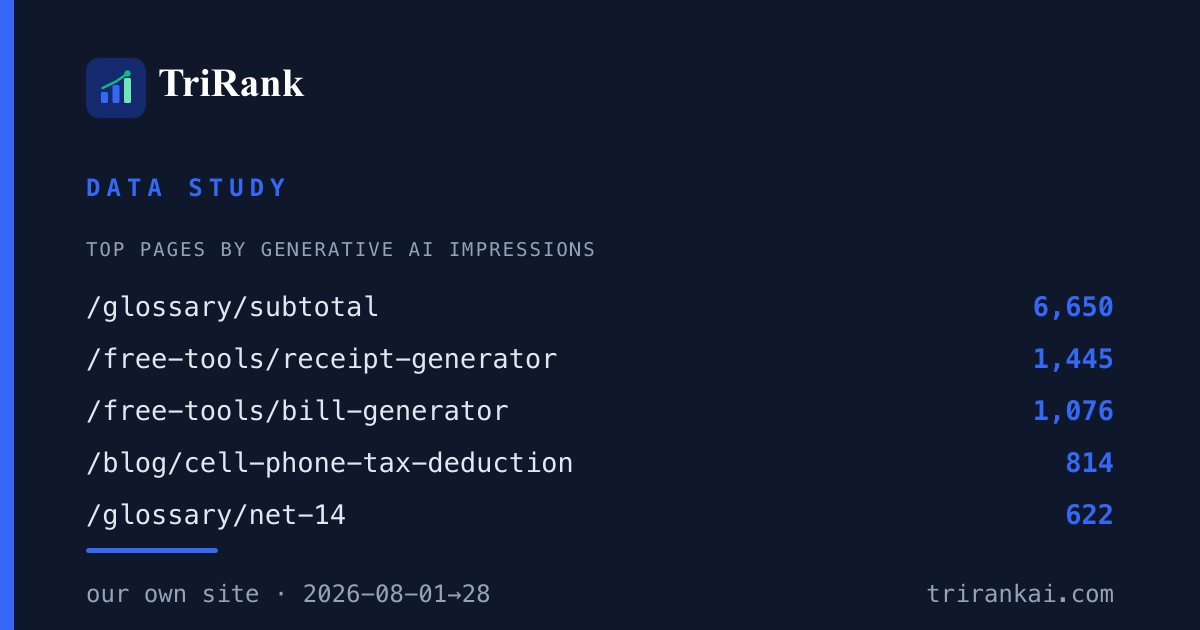
Google's Generative AI Report, Next to a Citation Sweep of the Same Site
Google now reports which pages it showed inside generative AI features. We put that export beside our own multi-engine citation sweep of the same site over the same 28 days — and the first thing worth saying is that the two denominators are nothing alike.
邮件列表
加入我们的社区
订阅邮件列表,及时获取最新消息和更新