Self-Hosting Your SEO Stack: What It Actually Costs
Open-source SEO tools are having a moment, and self-hosting one is a real option. Here is the honest arithmetic: metered data fees, maintenance, a history that starts at zero, and one upstream you do not control.
Open-source SEO tooling is having a genuine moment. OpenSEO, which describes itself as an open source alternative to Semrush and Ahrefs, has collected 13,993 stars and 1,669 forks since it was created in February 2026 (GitHub API, read 2026-08-29). The pitch is easy to like and, on its own terms, accurate: MIT-licensed code, no subscription, bring your own API key, fork it and change whatever you want.
We are not here to argue against that. TriRank publishes its own browser extension as open source, and the case for owning your tooling is one we agree with. But "free software" and "free" are different claims, and the gap between them is where teams get surprised. This post is the arithmetic — what a self-hosted stack actually costs, when it is the right call anyway, and which costs no stack of any kind can remove.
Bill one: the data is metered, and the interesting queries cost the most
The single most important fact about open-source SEO tools is that they generally do not gather search data themselves. Scraping engines at scale is expensive, adversarial, and legally fraught, so the practical design is to call a commercial data API. OpenSEO's README says so plainly: you need a DataForSEO API key, and "you pay them directly when self hosting."
DataForSEO's pricing page describes a pay-as-you-go model with a 50 US dollar minimum payment. That model is genuinely cheaper than a seat licence for low volume — and it is metered, which means your bill tracks your ambition rather than your headcount.
The shape of the meter matters more than any headline rate. OpenSEO's own pricing estimator prices a keyword search at about $0.05, a backlink domain overview with one year of history at about $0.08, and a ChatGPT brand check at about $1.09 — a figure the page itself annotates as "This is the expensive one." Roughly twenty times a keyword lookup, in other words, for the AI-visibility line.
It is worth knowing what that buys, because it is not what most people assume. OpenSEO's Brand Lookup — the feature that reports how a brand is mentioned in ChatGPT and Google AI Overview — queries DataForSEO's LLM Mentions API, and the source file notes that the data "refreshes daily; underlying API is updated monthly." So the expensive query class here is a lookup against a stored mentions index, not an engine being asked your question at that moment. That is a sensible design for the question it answers, and it is a different product from a live check. Worth knowing before you budget for one and receive the other — and worth checking on any tool you evaluate, ours included, because the price tag does not distinguish the two.
Read that against how AI citation tracking actually has to work. One brand check is a single reading of a non-deterministic system, which is close to worthless on its own; the signal lives in a prompt set re-run on a schedule across several engines. Fifty prompts re-run weekly is fifty checks per engine per week; multiply that by the engines you track and again by the weeks in a month, and at roughly a dollar each the arithmetic gets away from you quickly. The default scenario on OpenSEO's estimator, with brand checks set to zero, comes to $7.12 of estimated monthly usage. Turn the AI monitoring on at any serious cadence and that is no longer the line item you are looking at.
None of this makes the metered model bad. It makes it a variable cost that scales with exactly the work you most want to do.
It is worth knowing what the alternative costs, because in this case the project publishes it. OpenSEO's hosted version is $10/month including $10 of usage, and its README states that the hosted service makes money "by charging 28% extra for every request we make to DataForSEO." That is an unusually honest disclosure, and it is the number that makes the comparison concrete: self-hosting saves you the subscription floor and a 28% markup on data. Whether 28% is a good price for not operating the thing yourself is a question about your own hourly rate, which is the next bill.
Bill two: deployment and maintenance are real hours
Self-hosting means you run it. OpenSEO recommends Cloudflare for internet-facing deployments and notes it works on the free plan, so the hosting bill genuinely can be near zero. The hosting bill is not the cost.
The cost is the hours: initial deployment, API key and secret management, upgrades, database backups, and being the person who gets paged when the nightly job stops writing rows. These hours are invisible in the same way the hours in the true cost of manual SEO are invisible — they are absorbed into a salary that was already being paid, which makes them feel free.
If you want the honest number for your own situation, put the API spend and the maintenance hours into our SEO cost calculator alongside everything else. The arithmetic is not complicated. It is just rarely done.
Bill three: your history starts at zero today
This is the cost nobody quotes, and it is the one that cannot be bought back later.
A hosted tool hands you an index that has been accumulating since before you signed up: historical rankings, Domain Rating over time, backlink data with a past. A fresh self-hosted install knows nothing about last quarter. It begins collecting on the day you deploy it, which means the trend line you actually want — is this getting better or worse — is a year away no matter how much you spend today.
You can buy historical data from the API to backfill some of it, which converts the problem into more metered spend. For anything the API does not carry historically, there is no purchase that fixes it. The only way to have a year of history next year is to have started a year ago.
Bill four: one upstream, and you do not control it
Every SEO tool ultimately depends on what search engines return, and that dependency has been active recently.
On 26 August 2026, Google confirmed it was deploying goto URL redirects on the links in its search results, described as a technical measure to protect against abuse of its results (Search Engine Land, 27 August 2026). Result links now route through a google.com/goto address with an encoded destination. Anything that read destination URLs straight off the results page has to change how it works.
Self-hosting does not remove this risk; it concentrates it. A hosted vendor absorbs a break like that as part of what you pay them for — engineering you never see, on a deadline that is their problem. Self-hosted on a single data API, you inherit both the upstream change and the wait for your provider to ship an adaptation, and you find out about it when your dashboard goes quiet.
In fairness, that wait was short in this case. DataForSEO had already shipped resolution for organic results before the rollout broadened, and on 28 August 2026 it released an update returning direct destination URLs across all affected SERP elements, including AI Overviews — the surface where it had said the remaining impact was concentrated (DataForSEO update, posted 27 August 2026, updated in place 28 August 2026). A well-run data provider absorbs a change like this in days. The point is not that providers are slow; it is that the clock belongs to them and not to you.
Even DataForSEO's published parameters show the same dependency, priced. Its SERP API documentation notes an extra $0.002 charge for load_async_ai_overview, the parameter that fetches AI Overview items when they load asynchronously rather than serving them from cache, and $0.00015 per click for people_also_ask_click_depth. Those are the two surfaces GEO work cares about most, and both are billed as extras precisely because the engine made them harder to get.
When self-hosting is the right answer
Plainly: often.
Self-host if your data cannot leave your infrastructure, for policy reasons or client confidentiality. Self-host if your usage is spiky — a burst of research twice a year is a bad match for twelve monthly subscription payments, and metered billing is strictly better for that pattern. Self-host if you want to change the tool, because that is a thing no hosted product will ever let you do. Self-host if you are building a product on top of the data rather than reading dashboards, where a vendor's UI is overhead rather than value.
And self-host if you simply want to own your stack. That is a legitimate reason on its own, and the 13,993 people who starred that repository are not making a mistake.
The one case where the arithmetic reliably turns is high-volume scheduled AI monitoring, where the metered cost of the expensive query type compounds every week — and even there, "turns" means worth comparing, not obviously wrong.
What no stack replaces
Three things survive every version of this decision.
Your own Search Console data. It belongs to your property. No vendor supplies it, no API sells it, and hosted or self-hosted makes no difference to it.
Execution. A stack that measures a problem has not fixed it. Every tool discussed here — ours included — outputs a finding, and findings do not publish pages, fix schema, or earn citations. That gap is the subject of automated vs manual SEO, and no licence model closes it.
History. Discussed above, and worth repeating because it is the only cost on this page that gets more expensive the longer you wait.
Where TriRank sits
We are a hosted service that tracks AI visibility across engines, so we are not a neutral party and there is no point pretending otherwise. What we sell is the metered, scheduled AI checking described above, run for you, with the history already accumulating and the upstream breakage absorbed as our problem rather than yours.
That is worth paying for when measurement is a means to an end and you would rather not operate it. It is worth nothing to you if what you actually want is control over the tooling — and if that is what you want, self-hosting an open-source stack on your own DataForSEO key is the correct choice, not the compromise. Buy the software freedom, budget the metered spend and the maintenance hours honestly, and start collecting history today rather than next year.
If you want a read on where you currently stand before deciding what to run, our free audit is a single pass across the engines and costs nothing either way.
Sources
Every figure above, with where it came from and when it was read.
| Figure | Source | Read |
|---|---|---|
| 13,993 stars, 1,669 forks, MIT, created 2026-02-27 | github.com/every-app/open-seo (GitHub API) | 2026-08-29 |
| "you need a DataForSEO API key… You pay them directly when self hosting" | OpenSEO README, Costs | 2026-08-29 |
| Cloudflare self-hosting works on the free plan | OpenSEO README, Self-Hosting | 2026-08-29 |
| Hosted service charges "28% extra for every request we make to DataForSEO" | OpenSEO README, Costs | 2026-08-29 |
| ~$0.05 per keyword search; ~$0.08 per backlink domain overview with one year of history; ~$1.09 per ChatGPT brand check; $7.12 estimated monthly usage in the default scenario; $10/month base plan including $10 of usage | openseo.so/pricing | 2026-08-29 |
| Brand Lookup queries DataForSEO's LLM Mentions API; "refreshes daily; underlying API is updated monthly" | OpenSEO brandLookup.ts | 2026-08-29 |
| Pay-as-you-go model; $50 minimum payment | dataforseo.com/pricing | 2026-08-29 |
$0.002 extra for load_async_ai_overview; $0.00015 extra per people_also_ask_click_depth click | DataForSEO SERP API docs | 2026-08-29 |
| Google confirmed deploying goto URL redirects on search result links — event dated 26 August 2026, article published 27 August 2026 | Search Engine Land | 2026-08-29 |
| DataForSEO resolved organic goto URLs ahead of the broader rollout, said the remaining impact was concentrated in AI Overviews, and on 28 August 2026 returned direct destination URLs across all affected SERP elements including AI Overviews — post dated 27 August 2026, carrying an in-place update note dated 28 August 2026 | DataForSEO update | 2026-08-29 |
Prices and star counts move. Each row names the page it came from so you can re-read it yourself rather than trust this one.
FAQ
Is self-hosting an SEO tool actually free?
The software is free; the data is not. Open-source SEO tools generally do not scrape search engines themselves — they call a commercial data API and pass you the bill. OpenSEO's README is explicit that you need your own DataForSEO API key and that you pay DataForSEO directly when self-hosting. So the licence cost goes to zero and the marginal cost per query does not. What you save is the vendor's margin and the subscription floor, not the cost of the data.
How much does the data behind a self-hosted SEO tool cost?
It is metered per request rather than billed as a flat monthly fee, so the honest answer is that it depends entirely on your query volume. DataForSEO publishes a pay-as-you-go model with a 50 US dollar minimum payment. OpenSEO's own pricing estimator puts a keyword search at roughly 0.05 US dollars, a backlink domain overview with a year of history at roughly 0.08, and a ChatGPT brand check at roughly 1.09 — which it labels the expensive one. Light research use is inexpensive. Scheduled monitoring across many keywords and several engines is where the meter starts to matter.
When is self-hosting an SEO stack the right choice?
When control is the thing you are buying. Self-hosting is the correct answer if you need your data to stay inside your own infrastructure for policy or client-confidentiality reasons, if your query pattern is spiky enough that a flat subscription is poor value, if you want to modify the tool itself, or if you are building a product on top of the data rather than reading dashboards. Those are real requirements, and no hosted product satisfies them as well as code you run yourself.
What can a self-hosted stack not give you?
Three things. Your own Search Console data, which belongs to your property and is not something any tool vendor supplies. Execution, because a stack that measures a problem does not fix it. And history, which is the one cost that cannot be paid retroactively — a fresh install knows nothing about last quarter, and the only way to have a year of trend data next year is to have started collecting it a year earlier.
What happens when the upstream search engine changes?
Everything downstream absorbs it, and self-hosting concentrates that risk rather than removing it. On 26 August 2026 Google confirmed it was rolling out goto URL redirects on search result links as a technical measure against abuse of its results, which changes how any tool reading result URLs has to work. A hosted vendor absorbs that kind of break as part of the subscription. When you self-host on a single data API, you inherit both the upstream change and the wait for your provider to adapt to it.
Author

Categories
Free tools for this
More Posts
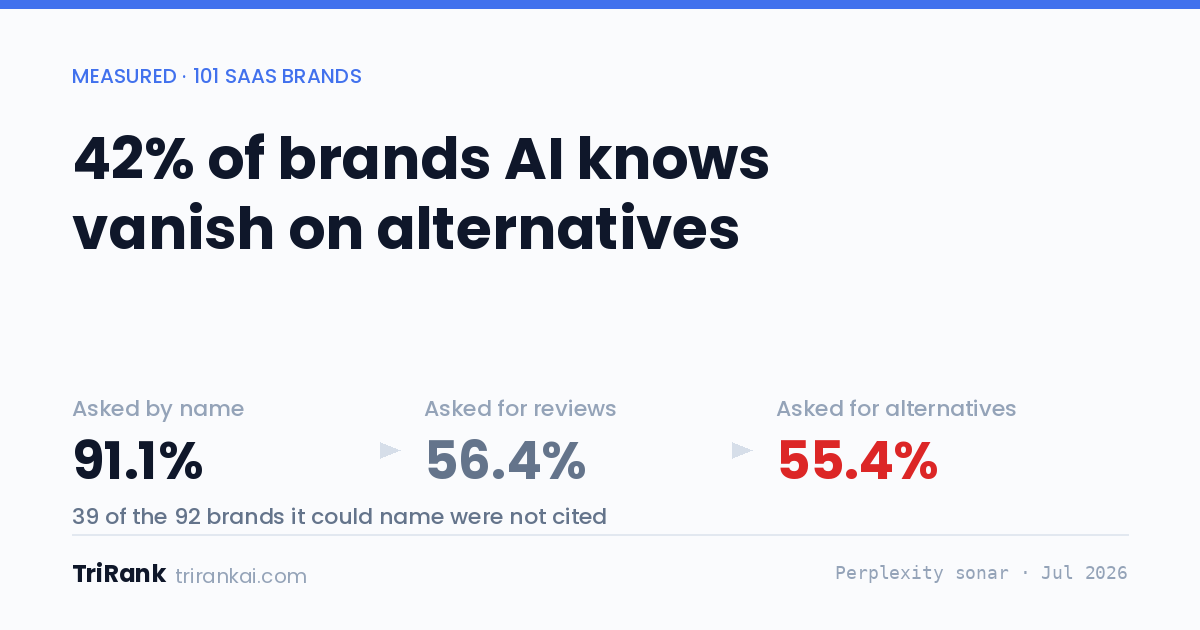
42% of Brands AI Knows By Name Vanish When You Ask for Alternatives
AI engines name 91% of SaaS brands asked directly. Ask the same engine for alternatives in that category and 42% of them disappear. Measured across 101 brands.
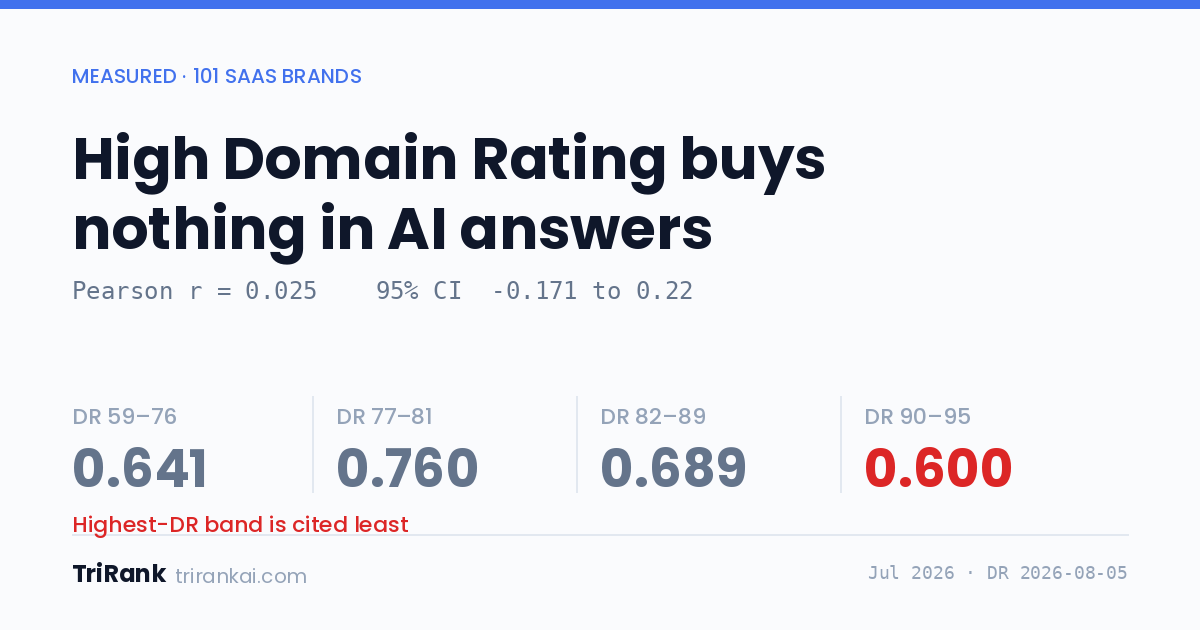
High Domain Rating Buys You Nothing in AI Answers
We crossed Ahrefs Domain Rating with AI citation rates for 101 SaaS brands. The highest-DR band is cited least often. Here is the data and its limits.
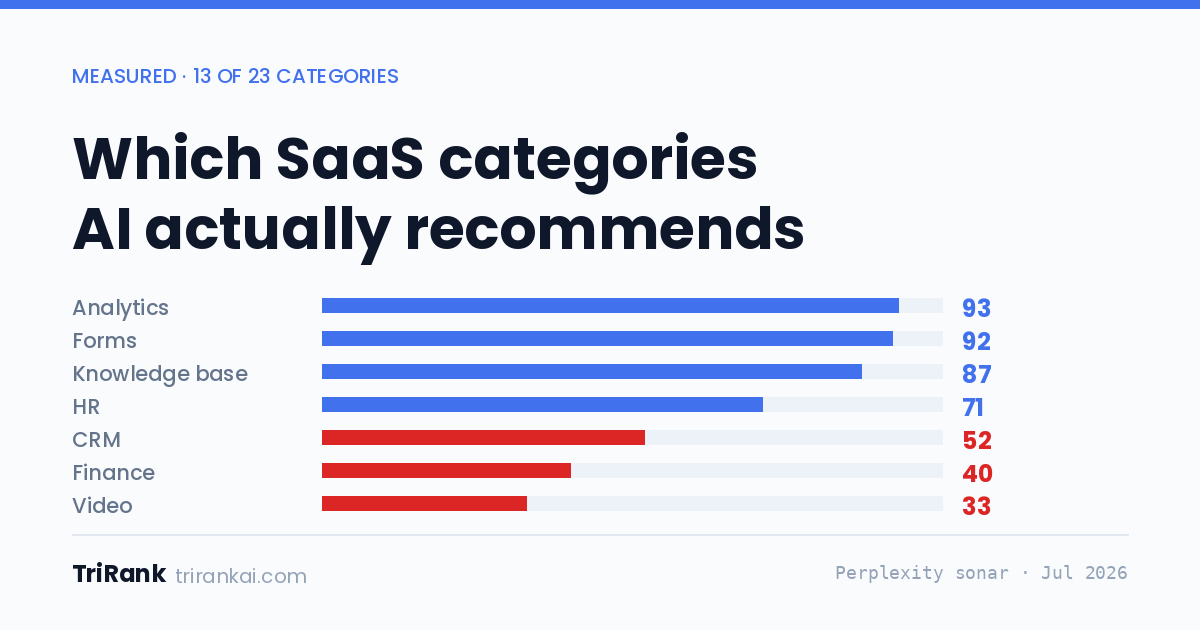
Which SaaS Categories AI Actually Recommends (13 Categories, Measured)
Analytics tools score 93 out of 100 on AI visibility. Video tools score 33. We measured 13 SaaS categories on the same three questions in July 2026.
Newsletter
Join the community
Subscribe to our newsletter for the latest news and updates